Riverside to go

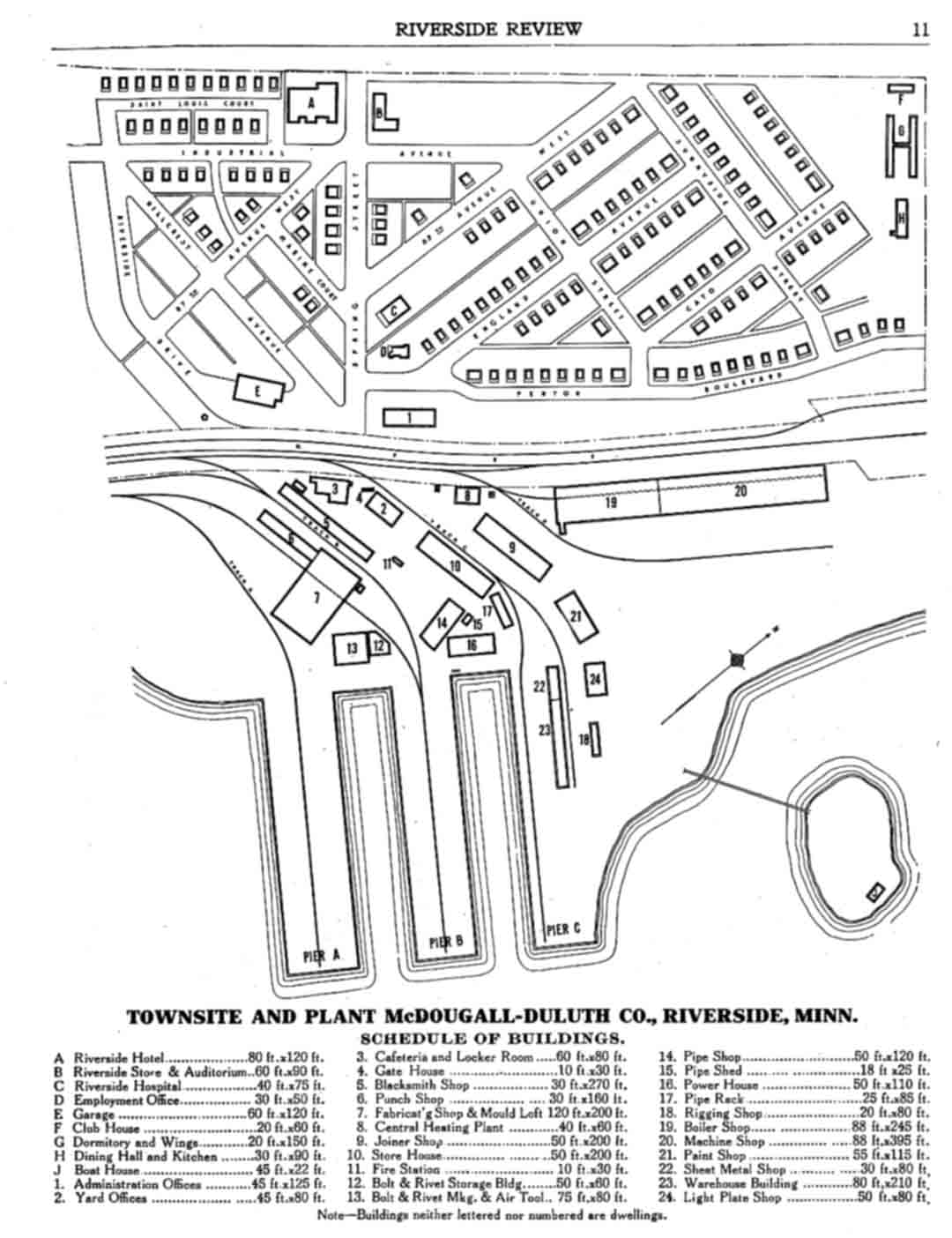
Riverside Map - September 1918

Riverside Map – September 1918

The Canal Society of New York State Winter Symposium at Rochester, New York, on Saturday, March 1, is going to feature my work on Riverside and the McDougall-Duluth Company. I get the pole position – 8:30 a.m. – so I’ll need to be sharp and ready first thing! The Society is also a driving force behind the preservation of the last existing McDougall-Duluth Company boat, the Day Peckinpaugh, originally the I.L.I. 101. It is a great honor to be asked for a return presentation and I am looking forward to it – here’s to good weather so my plane isn’t delayed.

Josefa – To Spain and back again, a vessel’s tale

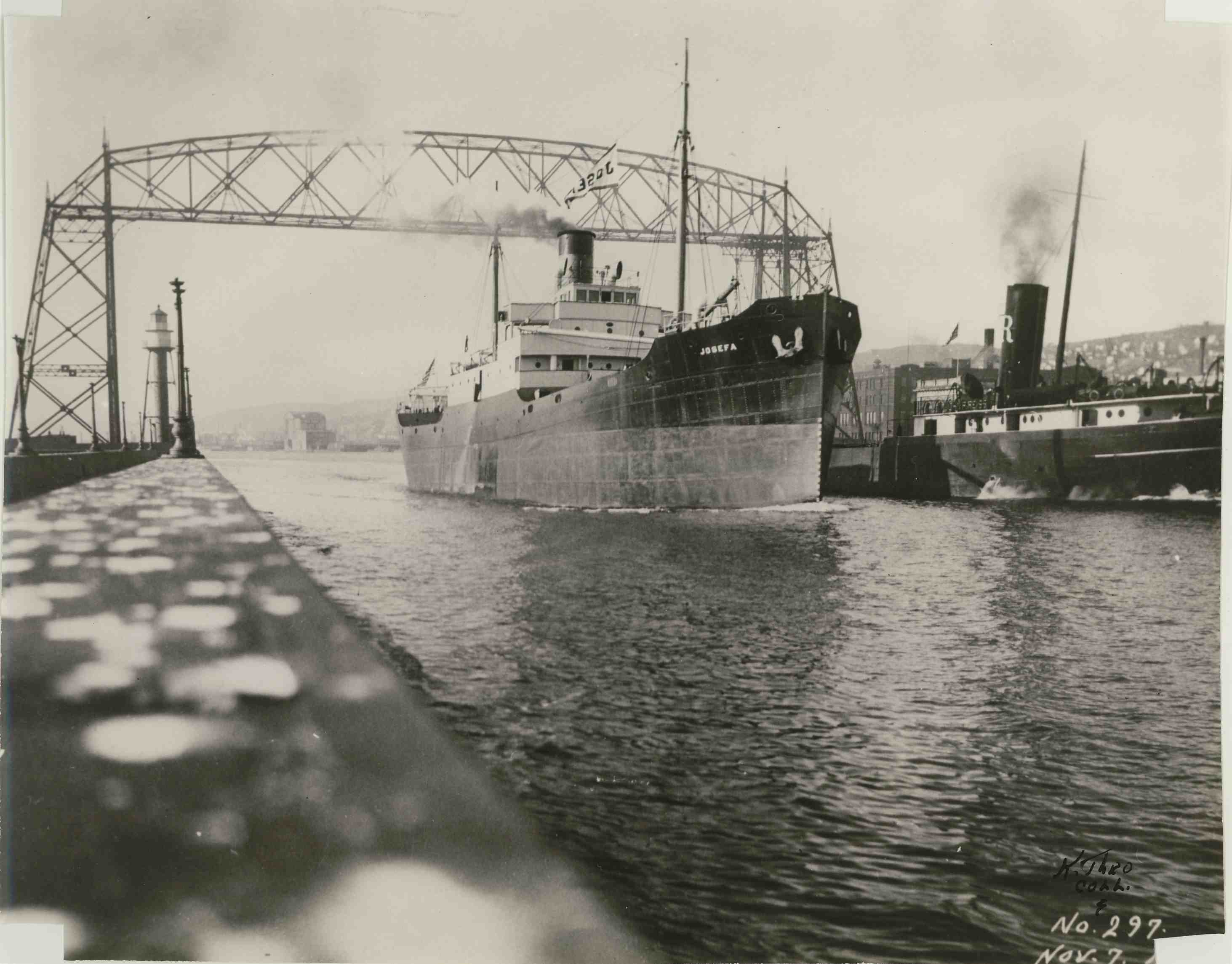
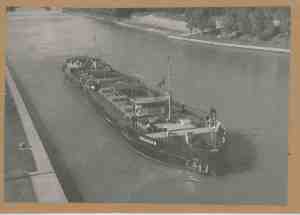
Josefa departing Duluth on Monday, November 8, 1920 at 1:30 p.m.  Photo from the Fr. Edward J. Dowling, S.J. Marine Historical Collection, University of Detroit Mercy

Josefa departing Duluth on Monday, November 8, 1920 at 1:30 p.m.
Photo from the Fr. Edward J. Dowling, S.J. Marine Historical Collection, University of Detroit Mercy

The abrupt end of the First World War in November 1918 left the United States’ shipbuilding industry in a rather large quandary. Though the United States Shipping Board honored the contracts already on the books, it certainly meant the end of the lucrative contracts enjoyed by the “pop-up” companies who had rushed to fill the void. Some of these had provided vessels of indifferent build quality, while others had engaged in outright graft. The exorbitant contracts extended to all firms to pressure them to expand and build faster and in greater numbers also would plague the USSB until the 1930s. It also provided valuable lessons for the Second World War where contracts held different terms, and only a select number of shipyards built the famous Liberty and Victory ships.

The end of the war posed a serious challenge to the McDougall-Duluth Company and it’s Riverside shipyard. Unlike Globe Shipbuilding in Superior, Wisconsin, company president Julius Barnes had structured McD-D to last far beyond the war. Even before the end of the war, Barnes and A. Miller McDougall sought new contracts for the firm. Using the basic Frederickstadt design, the hull received linings to serve as tankers, notably for molasses in the lucrative Caribbean sugar trade. Five vessels were constructed on speculation in the hopes of attracting purchasers

Two were purchased for the Compania Contrabrino de Navegation of Barcelona, Spain, through a Belgian broker with cash not being an object. Problems started immediately when the Cuban sugar market crashed and the Spanish company struggled to find financing. Finally the financing came through, but to be certain the yard would send representatives to ensure a smooth transition.  To great fanfare the Josefa and Antonio departed Duluth at 1:30 and 4:20 p.m. respectively on Monday, November 8, 1920. The vessels had Spanish crews with a few Americans under the command of the yard’s tugboat skipper, Captain D.E. Stevens, to take the vessels across the Atlantic for its new owners to take possession in Genoa, Italy. Upon reaching Montreal a new complication cropped up. The combination of an American supercargo seeking clearance of an American-flag vessel, manned by a Spanish crew, from a Canadian Port to an Italian destination was something of a problem.

Upon arriving in the Mediterranean the Spanish crew discovered that they were heading to Genoa instead of Barcelona and promptly filled the fresh water tanks with sea water forcing the Josefa into Barcelona. Having worked on an American-flag vessel, the crew demanded of Stevens the higher U.S. wage rate and mutinied by walking off the ship and appealing to the U.S. consulate. The remainder of the American crew, contracted only to get the vessel across the Atlantic, departed for home and left Stevens to man the ship. The ambassador left the matter to his staff, and after a lengthy period of wrangling it was found that the original purchasers could no longer pay for the ships. The McDougall-Duluth Company repossessed the vessels and managed to find a new purchaser in Barcelona. At long last, Captain Stevens could finally return home.

Josefa would be renamed and continue sailing throughout Europe, surviving both the Spanish Civil War and  World War II until its 1964 scrapping in Spain.

Collingwood Shipbuilding and the Howard M. Hanna Jr.

1913 has been a recurrent theme as of late, both on the blog and then in my professional life. Collingwood Shipbuilding constructed the ill-fated James Carruthers and also its follow-on ship, the J.H.G. Hagarty. In the months following the Carruthers’ loss, the yard’s superintendent, John Leitch, carried on correspondence with the firm’s leadership regarding how to address the perceived shortcomings of the design. The A.A. Wright, the head of the St. Lawrence and Chicago Steam Navigation Co., the owner of the Carruthers and the Hagarty had his own ideas of how to improve the design. As Leitch observed in a letter on July 20, 1914, “we do not want a repeat of the Carruthers.

Leitch’s letterbooks, housed at the Town of Collingwood Museum, provide some insight into both that process and then their view on their major repair task, the Howard M. Hanna, Jr. The Hanna, built by the American Shipbuilding Company facility at Cleveland, Ohio in 1908 was a standard steel bulk freighter of the early twentieth century. In the 1913 storm the Hanna was driven onto the Port Austin Reef on the tip of Michigan’s Thumb on Lake Huron. Salvaged the the Reid Wrecking and Towing Company, the Hanna made it to Sarnia under its own steam and was offered for sale. James Playfair, operator of the Great Lakes Transportation Company agreed to purchase it and have it reconditioned at Collingwood Ship.

When the Hanna arrived at the yard, Leitch had few complimentary things to say. Though the vessel suffered splits in the hull, and then significant denting and damage to the outer hull, it had not split in half completely. However, the cabins of the Hanna had taken significant damage and Leitch observed that this was exactly what the redesign of the Hagarty would avoid. He also noted that: “The starboard side of the forecastle has been stove in with heavy seas and the structure there shows how lightly she was built.” The discussion in the letters appears to ignore the fact that much of the critique of the Hanna ignores the loss of the supposedly superior Carruthers. That sense of ego jars with the seemingly lack of hubris that the Carruthers had sailed with the prior year, harking back to a similar sense with the Titanic.

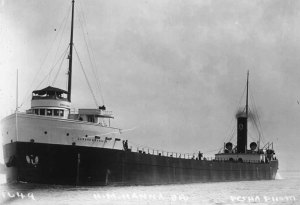
HowardMHannaJr1

The Hanna as built with an open pilot house in the service of the Hanna Furnace Company.
Photo from Fr. Edward J. Dowling, S.J. Marine Historical Collection, University of Detroit Mercy.

HowardMHannaJr1c

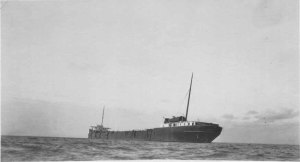
On the Port Austin Reef after the storm.
Photo from Fr. Edward J. Dowling, S.J. Marine Historical Collection, University of Detroit Mercy.

HowardMHannaJr1d

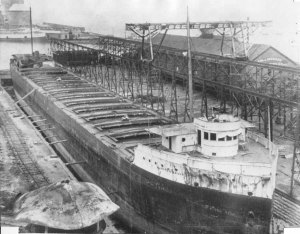
In dry dock of the Collingwood Shipbuilding Company – note the damage to the starboard bow on the Hanna as noted in Leitch’s letter.
Photo from Fr. Edward J. Dowling, S.J. Marine Historical Collection, University of Detroit Mercy.

HowardMHannaJr1f

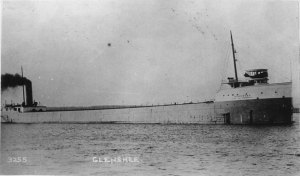
After rebuilding as the Glenshee in the Playfair fleet.
Photo from Fr. Edward J. Dowling, S.J. Marine Historical Collection, University of Detroit Mercy.

Rebuilt and put back into service, the Hanna would go on until 1983 as the Lionel Parsons when it was scrapped after serving as a grain storage facility. The Hagarty would sail on until it was sold for scrap in 1968.

I.L.I 105 – A Ghost of Arthur Kill, Staten Island

Of the many creations of Alexander McDougall, only a few of them remain for viewing in one form or another. The the Meteor (originally the Frank Rockefeller), the tugboat Islay, and though not fully McDougall’s design, the Day Peckinpaugh., formerly the I.L.I. 101 (the initials stood for “Interwaterways Line Incorporated”), and the Michigan, formerly the I.L.I. 105. The latter boats were a series of designs intended to operate both on the Great Lakes and the New York State Barge Canal. McDougall’s major backer for the McDougall-Duluth Company, Julius Barnes, went forward from the company’s original vessel the Robert L. Barnes to create these vessels. Constructed from 1920-1922 at the Duluth yards, they were the last vessels built there during its first phase of operation.

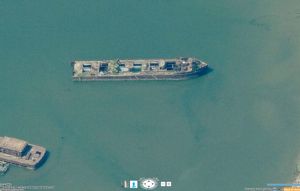
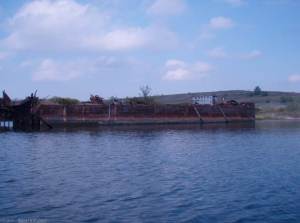
The final vessel built, the I.L.I. 105 was renamed the Michigan in the 1930s and vanished from documentation during the 1970s. From some contacts, I am pretty certain that the remnants of the vessel are lying partially scrapped in the famous ship graveyard of the Arthur Kill near Staten Island, directly behind the Fresh Kills landfill. The company the last owners had sold the hull to for scrapping went out of business before it completed the scrapping process.

I have heard that the remains left at this site are either going to be or are currently being disposed of to clear the waterway. What the impact of Superstorm Sandy has been on these hulls is unknown at this time. The ghosts of the Arthur Kill will not last forever.ILI105aThe I.L.I. 105 as originally configured – sometime in the 1920s.
ILI105dAnd then later on after being renamed and reconfigured.
Michigan-ILI105-ArthurKill2011Aerial view from Bing maps in 2011.
Michigan-ILI105And then sent to me from a blogger from closer up. Fresh Kills Landfill in the background where the 9/11 debris was examined.

Births and Deaths

Superior Public Museums acquired a set of materials from McDougall’s West Coast family in Washington State in the last month. Included in that material is a portrait of Islay, McDougall’s third daughter. Images of the family are comparatively scarce and such a family portrait is a welcome addition to the extent materials.

I was asked to provide some information regarding Islay for the SPM’s newslettter, and that prompted an interesting set of thoughts. Page 124 of the 1932 Autobiography lists Islay’s death being in 1895. Additionally, the headstone at Forest Hill Cemetery in Duluth also lists her birth as being in 1887 and death in 1895. So, that should settle things right?

Hardly. The Duluth Daily News for November 21, 1893 observes that Islay McDougall “daughter of Capt. McDougall, passed away after a long illness.” The paper for the 22nd, notes that a memorial service would be held at McDougall’s house. On the 23rd the paper states that “a memorial service was held and well attended.” This is for 1893, not 1895. According to the Minnesota state census of 1895, there is no Islay McDougall listed for the family. So, something is going on here.

The problem is that the death certificate for Islay is not listed on-line, so where it is would be in Minnesota, a rather long ways away from Grand Rapids, Michigan. Similarly, her birth certificate, if she had one, is quite the distance from here. Additionally, the U.S. Census for 1890 was destroyed in a fire for the city level enumeration, so that is of no help. The Minnesota state census for 1885 is prior to the time that she was born, so no help there either.

At this point, I am fairly confident that unless the newspaper, that was very specific regarding whom it was speaking of, is wrong, Islay actually died in 1893. All of the stones at Forest Hill are very similar indicating that they were put there after the fact, not individually as a person passed. Further, there is a listing from Ontario, for a baby born in Toronto in 1880 that would link with the headstone marked “Baby.” The listing has a name of “Constance” but no parents, so it would be interesting if that was that baby.

Certainly the McDougall’s were no strangers to tragedy. The oldest son, Ross died in 1890 at age 12, a daughter born in 1880 , as did a daughter Elsie at just shy of 18 months in 1883, and then Islay. Only two children lived to adulthood, Alexander Miller (born September 10, 1884) and Emeline (also spelled “Emelyn”) Miller in either 1890, 1892, or 1893. And thus need to be careful as A.Miller also had a daughter with the same name as well as an Islay.

Such are the challenges of family history.
James Carruthers

Today was spent on grading and getting committee work organized for the rest of the month for GVSU. The nature of academic work escapes the public, much as I surmise most specialized work goes over our heads, but it is certainly not just sitting about thinking big thoughts in a coffee house. If one does a good job, then lots of papers to grade, egos to salve, and paperwork to organize. I do my level best to stop doing it by 10 p.m. and spend at least an hour on McDougall stuff, and that’s been a struggle for years. Which makes this project seemingly go on forever.

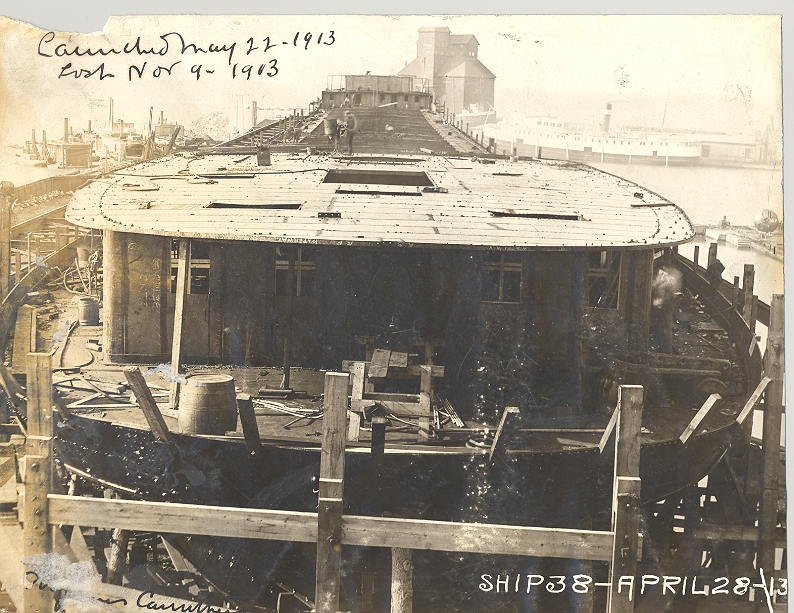
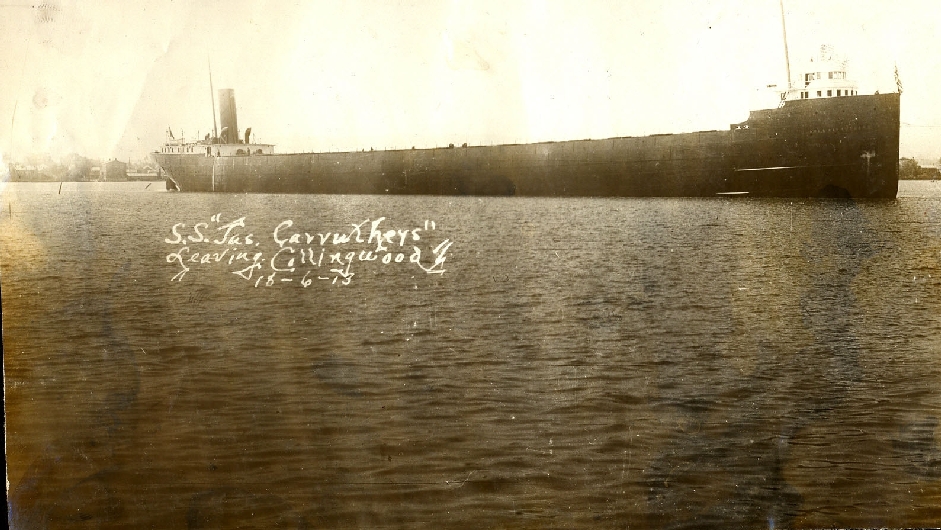
As I was working this evening I was reminded that the centennial of the 1913 storm is coming up in the next year. Sorting through some files to find a particular item reminded me of a photo that I obtained from the Collingwood (Ontario) Museum) last year. Far from being a disinterested observer, Captain McDougall took a leading role in the operation of Collingwood Shipbuilding, including the construction of the James Carruthers perhaps the most famous of 1913’s losses on Lake Huron. Prior to this time, I can’t remember seeing either of these images. The first is from April 28 and her stern cabin.

The second is her departure from Collingwood on June 13, 1913, within five months she would be on the bottom not 150 miles away from her launching site.

One can only wonder at what McDougall thought of the loss of this, greatest of all Canadian ships at that time, and from his shipyard no less. Carruthers‘ sister ship, the J.H.G. Hagarty would have her cabins, hatches, and decks ripped off and reworked during the winter of 1913-1914. This would delay her launch until well into 1914 and give her a far different profile than the Carruthers. The Hagarty would sail until the late 1960s.

Link

http://www.nc-wreckdiving.com/WRECKS/CARIBSEA/CARIBSEA.HTML

During my tour of Riverside this past Saturday, I remarked that there were only two remaining complete McDougall vessels and one being scrapped. However, those of a diving persuasion can find another of the McDougall-Duluth Company vessels: theLake Flattery (later the Caribsea). Completed in 1919, the vessels sank in March 1942 when torpedoed off the Outer Banks of North Carolina.
She is in pretty fragile shape, but good to know where she is. I’m writing to the dive shop where her original builder’s plate is and hopefully they will send me a photo. Having at least that for a McD-D boat would be great.

Riverside in the Fall

I couldn’t help but upload a panoramic image of Riverside that I took prior to leaving on Sunday. The colors are spectacular and it was great to walk through the community with a great group of McDougall enthusiasts. Hats off to Superior Public Museums’ staff and volunteers for organizing a fine event and to all the attendees.

A statement of purpose

Having just returned from the 2012 edition of McDougall’s Dream at the Superior Public Museums, it reminded me that for all the time spent on this project, very little has come of it. I tend to get sidetracked with grading, other projects, editing, and the like in my everyday life. McDougall, unfortunately, gets pushed aside in the press, until I either “have” the time or am pressed for something. Thus, this blog is a method to provide some motivation (an audience, no matter how small) and to provide some tangible outcome to the time I have spent on a person of no small interest. Thank you for reading, and I hope to offer some information and entertainment to my fellow McDougall devotees.