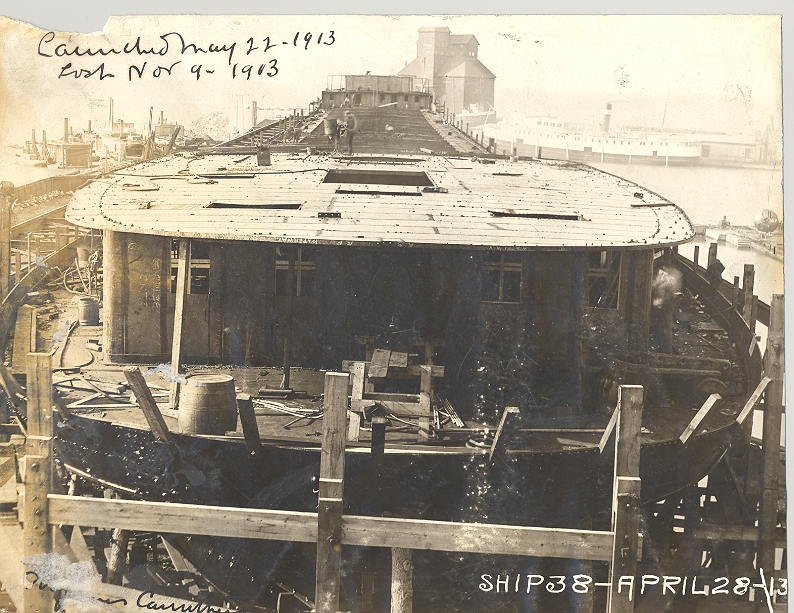
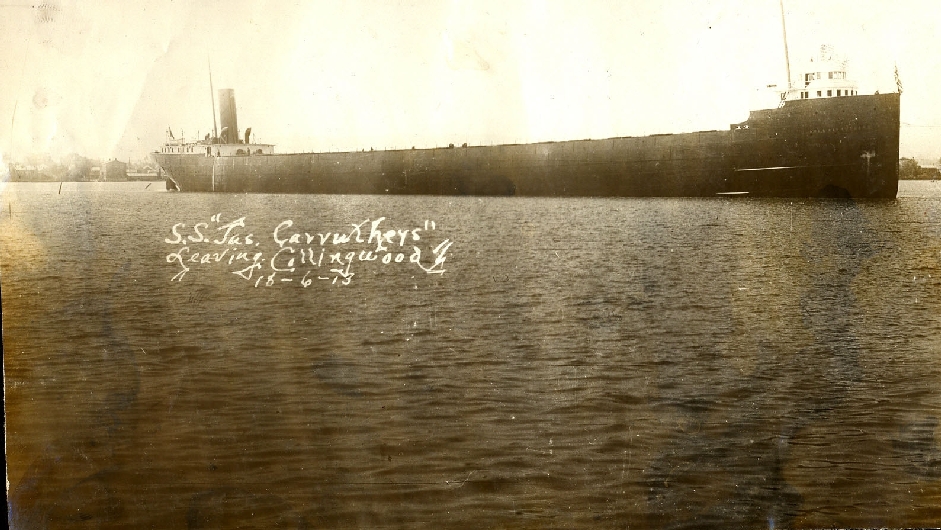
1913 has been a recurrent theme as of late, both on the blog and then in my professional life. Collingwood Shipbuilding constructed the ill-fated James Carruthers and also its follow-on ship, the J.H.G. Hagarty. In the months following the Carruthers’ loss, the yard’s superintendent, John Leitch, carried on correspondence with the firm’s leadership regarding how to address the perceived shortcomings of the design. The A.A. Wright, the head of the St. Lawrence and Chicago Steam Navigation Co., the owner of the Carruthers and the Hagarty had his own ideas of how to improve the design. As Leitch observed in a letter on July 20, 1914, “we do not want a repeat of the Carruthers.”
Leitch’s letterbooks, housed at the Town of Collingwood Museum, provide some insight into both that process and then their view on their major repair task, the Howard M. Hanna, Jr. The Hanna, built by the American Shipbuilding Company facility at Cleveland, Ohio in 1908 was a standard steel bulk freighter of the early twentieth century. In the 1913 storm the Hanna was driven onto the Port Austin Reef on the tip of Michigan’s Thumb on Lake Huron. Salvaged the the Reid Wrecking and Towing Company, the Hanna made it to Sarnia under its own steam and was offered for sale. James Playfair, operator of the Great Lakes Transportation Company agreed to purchase it and have it reconditioned at Collingwood Ship.
When the Hanna arrived at the yard, Leitch had few complimentary things to say. Though the vessel suffered splits in the hull, and then significant denting and damage to the outer hull, it had not split in half completely. However, the cabins of the Hanna had taken significant damage and Leitch observed that this was exactly what the redesign of the Hagarty would avoid. He also noted that: “The starboard side of the forecastle has been stove in with heavy seas and the structure there shows how lightly she was built.” The discussion in the letters appears to ignore the fact that much of the critique of the Hanna ignores the loss of the supposedly superior Carruthers. That sense of ego jars with the seemingly lack of hubris that the Carruthers had sailed with the prior year, harking back to a similar sense with the Titanic.
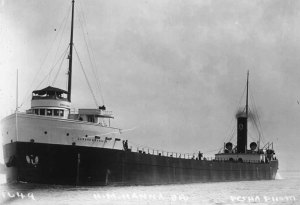
The Hanna as built with an open pilot house in the service of the Hanna Furnace Company.
Photo from Fr. Edward J. Dowling, S.J. Marine Historical Collection, University of Detroit Mercy.
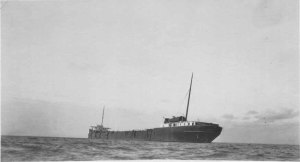
On the Port Austin Reef after the storm.
Photo from Fr. Edward J. Dowling, S.J. Marine Historical Collection, University of Detroit Mercy.
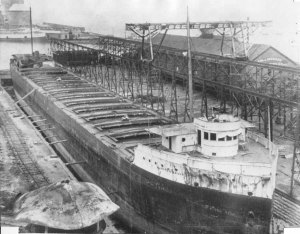
In dry dock of the Collingwood Shipbuilding Company – note the damage to the starboard bow on the Hanna as noted in Leitch’s letter.
Photo from Fr. Edward J. Dowling, S.J. Marine Historical Collection, University of Detroit Mercy.
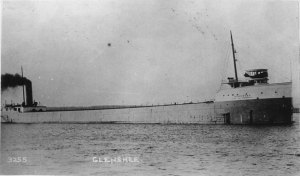
After rebuilding as the Glenshee in the Playfair fleet.
Photo from Fr. Edward J. Dowling, S.J. Marine Historical Collection, University of Detroit Mercy.
Rebuilt and put back into service, the Hanna would go on until 1983 as the Lionel Parsons when it was scrapped after serving as a grain storage facility. The Hagarty would sail on until it was sold for scrap in 1968.
 McDougall's Whaleback