Toledo, Ohio – March 8, 2017 Presentation

National Museum of the Great Lakes – Presentation

Though the link may not work, I wanted to post the presentation I gave at the National Museum of the Great Lakes in Toledo, Ohio on March 8, 2017. For those of you weather followers, that was the day of the huge windstorm that swept across Michigan, Illinois, Indiana, and northern Ohio. It was quite the trip from Grand Rapids to Toledo to say the least.

For those of you visiting the museum, make sure to check out the exhibit I helped create with Dr. Jeffrey Ram of Wayne State University’s School of Medicine. It will be up until August.

A Lively Scrap

The Whaleback Washburn was the scene of a Disgraceful Scrimmage.

Buffalo, Nov. 14 – A lively riot occurred on the whaleback steamer Washburn today. The seamen and firemen all of whom were on extended spree, engaged in a general fight. Capt. McFarland and a wheelsman who interfered were roughly handled. Capt. McFarland was badly cut about the face and otherwise injured. When the police arrived the riotous crew had all escaped from the steamer.

Duluth News-Tribune, November 15, 1892

Riverside documentary

A few years ago I was interviewed for the WDSE WRPT Public Television documentary “Lost Duluth II”. Its been uploaded to YouTube, and I felt it worthwhile to include it.

The entire documentary is excellent (as is the original Lost Duluth), and the Riverside section starts at 45:20 and ends at 50:29.

City of Everett Launching

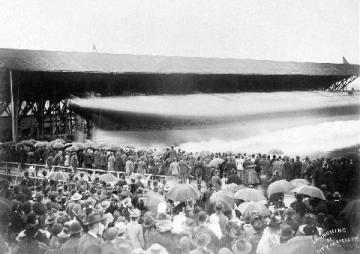
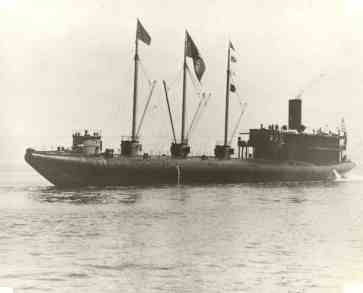
Wednesday, October 24, 1894 saw the launching of the long delayed whaleback City of Everett at Everett, Washington. Prior to the launching residents marched in a parade celebrating the triumph featuring a float shaped as the ship.

City of Everett_1b.jpg

Photo by Herman Siewert, Courtesy Everett Public Library (Image No. 0142)
http://www.historylink.org/File/9324

CityofEverett1 copy.jpg

City of Everett, 1895, from Dowling Marine Historical Collection, University of Detroit Mercy Libraries.

“Black Friday”Storm 1916

Friday, October 20, 1916 marks a century since Lake Erie’s “Perfect Storm.”

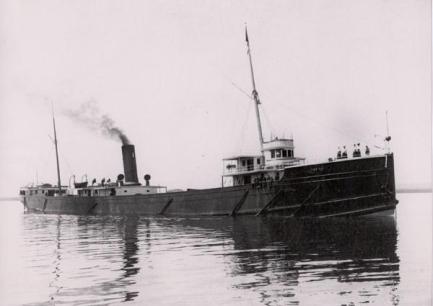
Four ships sank in the storm, including two steel steamers, the 1892 built whaleback James B. Colgate, and the 1893 built Merida. colgate
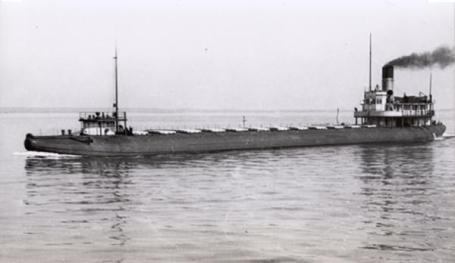
James B. Colgate (Dowling Marine Historical Collection, UDM Libraries)
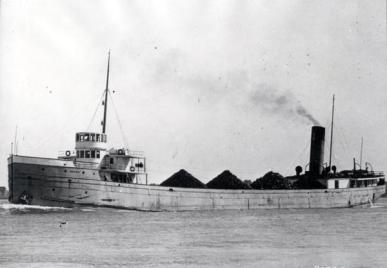
merida

Merida (Dowling Marine Historical Collection, UDM Libraries) about 1915.

Both were modified vessels from their original configurations. The Colgate during its time with the Pittsburgh Steamship Company had her hatches modified to a conventional raised coaming, wood planks, and waxed canvas tarpaulin design. Though easing the unloading process, it violated the essential principle of the whaleback design: that water should flow unimpeded across the main deck.

Merida experienced even greater changes having its engines located closer amidships and with a small cargo hold between the stern cabins. The location for unloading damaged the propellor shaft, and the rigging for mast and cabins hampered unloading equipment.
Merida1.jpeg Merida as originally configured.

Though still in the bulk cargo trade, both were considered small by 1916. Only the surge in demand from the First World War kept them in the trade along with their relatively larger size compared to other 1890s vessels. Most early iron and steel steamships were sold off-Lakes to fill the gap from submarine losses in the war since they could traverse the Welland and St. Lawrence River locks and canals.

Merida had been sold earlier in 1916 to the Valley Camp Steamship Company, managed by James Playfair, the Canadian shipping magnate. She carried an American crew despite the Canadian management. Colgate was operated by a Duluth firm, having been sold from the Pittsburgh fleet.

Both ignored storm warnings, sailed into Lake Erie, and unbeknownst to the other passed in the night. Captain Walter Grashaw of the Colgate would be the sole survivor of the two ships and told of hatches giving way, water rushing into the cargo holds, and a grim struggle to survive in the stormy waters. The Merida‘s crew had no one to tell their story, only silent bodies washing ashore along the coast of Ontario’s Long Point. The desolate sands of the point covered many the bodies and remains their final resting place. Those who could be identified were sent home while others rest in Port Rowan or as far north as St. Thomas.

Those who are interested in a fuller account of the loss and the subsequent effort to identify the dead, and the politics of the Lake Carriers’ Association’s efforts on behalf of non-unionized crew, see my article: “In the Wake of Disaster: The Lake Carriers’ Association, Welfare Capitalism and the Black Friday Storm of 1916.” International Journal of Maritime History, 24 (No.2, December 2010), 145-180.

For a recent media account see:

Mlive: 100th anniversary of the Black Friday Storm
Sidebar Projects

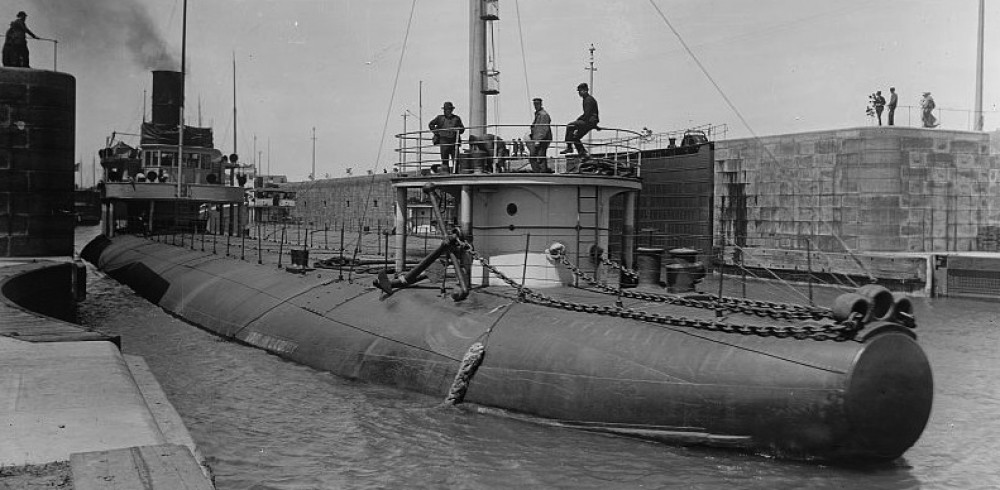
Tied to a current editing project I’m working on, the issue of ballast in whalebacks is particularly ignored.

Maintaining stability while loading and underway requires a delicate dance of water ballast and cargo. Whalebacks had a particularly ingenious system that offered good intake and output without the dangers of the “free-surface” effect that plagued so many ships such as the Eastland.

St. Louis Steel Barge Company

Established in March 1900, the barge company was intended to run shallow draft steel barges with a towboat in the grain trade between St. Louis, Missouri and New Orleans, Louisiana. Alexander McDougall implemented a design for the barges similar to what he would eventually use for the 1916 Duluth-built Robert L. Barnes. The barges, named A and B, appeared top heavy but proved sturdy and had a low draft. The towboat, the McDougall, was a twin propeller steel-hulled vessel of a relatively conventional design but described as very comfortably appointed for cabins and amenities. The towboat and barges were intended for relatively simple construction techniques and with shipyard workers contracted from Toledo, Ohio the vessels were built at Carondelet on the south side of St. Louis, Missouri during 1900. Running in the grain trade against the railroads proved very unprofitable and within a year of their launch they were converted to carry oil.

“The City of Smokestacks” – Everett, Washington

Much like its direct contemporary, West Superior, Wisconsin, the boosters of Everett, Washington during the early 1890s had such high hopes for their site on Port Gardner Bay, Puget Sound. Similar to were the efforts to promote the new townsite as in West Superior. In that city, the report of the “City Statistician” Frank Flowers appeared as a promotional brochure entitled “The Eye of the Northwest.” Everett’s in turn touted its industrial foundation, initially hauled around Cape Horn by the whaleback Charles W. Wetmore.

The City of Smokestacks – Everett, Washington


Return to the Blog

I’ve been away from the blog for an extended period of time due to a series of factors, few of them pleasant. As I’ve mentioned in earlier posts, my position is at a teaching university, not a research one such as the University of Michigan,Ann Arbor, and that makes difference. And I manage an ill parent on the other side of the Michigan from my home in Grand Rapids, so that hasn’t made things easy either.

That being said, I have not given up on the McDougall project, indeed it has continued in a limited fashion during the past year. This has included gathering additional sources and doing some editing of the chapters already completed. This summer will be an opportunity to actually work and write, unlike last summer.

What has also helped to get the project back on track is a request by the Superior Public Museums, a major benefactor of my work, to write a series of short descriptions of McDougall’s shipyards other than the American Shipbuilding Company in West Superior, Wisconsin. I am currently completing them and found it an excellent restart to the project.

Additionally, I was able to join a larger project on invasive species prevention through Wayne State University. This project involves a history of ship ballast from antiquity to the present day and how that has introduced invasive species such as the Zebra and Quagga mussels to the Great Lakes. My part is historical in nature, and since ballasting the whalebacks were of paramount importance, they will feature prominently my part of the project. This involvement has also brought funding and the ability to hire one of my best students to work with me and produce a scholarly article and hopefully a museum exhibit.

So, my summer looks to be one directly focused on the project in one way or another, so that is very positive. I also read during the winter items on what makes a good blog, so I will be posting every other day with new material. Some long, some short, some simply being updates.