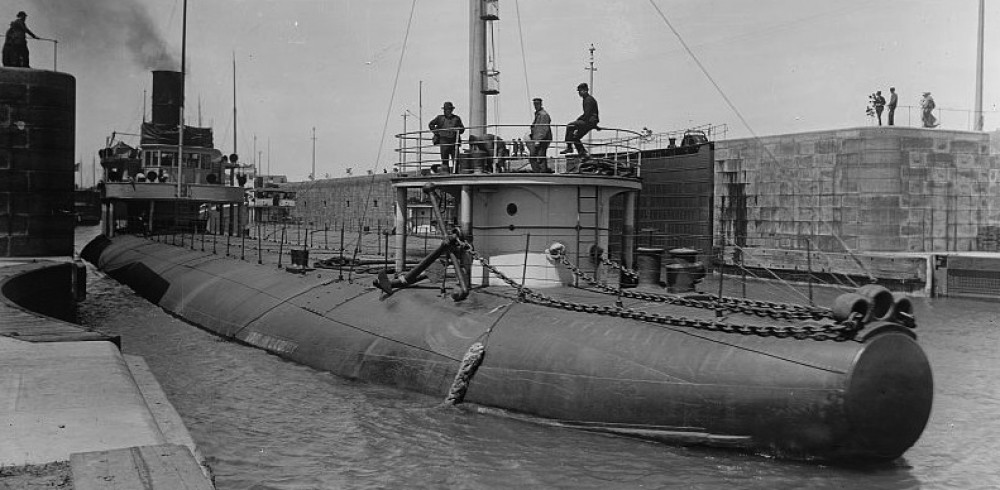
So, another in an off-and-on series of non-whaleback related posts.
An interesting component of Alexander McDougall’s life that gets short shrift in his Autobiography is his on-going business interests. After more than one presentation, I’ve been asked if McDougall ended up in poverty and nothing could be further than the truth. If one is thinking of serious wealth on par with the financiers and Wall Street types he had rubbed shoulders with during the 1890s, then he wasn’t in possession of that either.
What did come his way was a series of activities that not only kept him busy, but also demonstrated both his own business acumen, and then also the position he held within the Duluth / Great Lakes maritime community. At times he would extend beyond that, something I’ll touch on in other blog posts over the coming months.
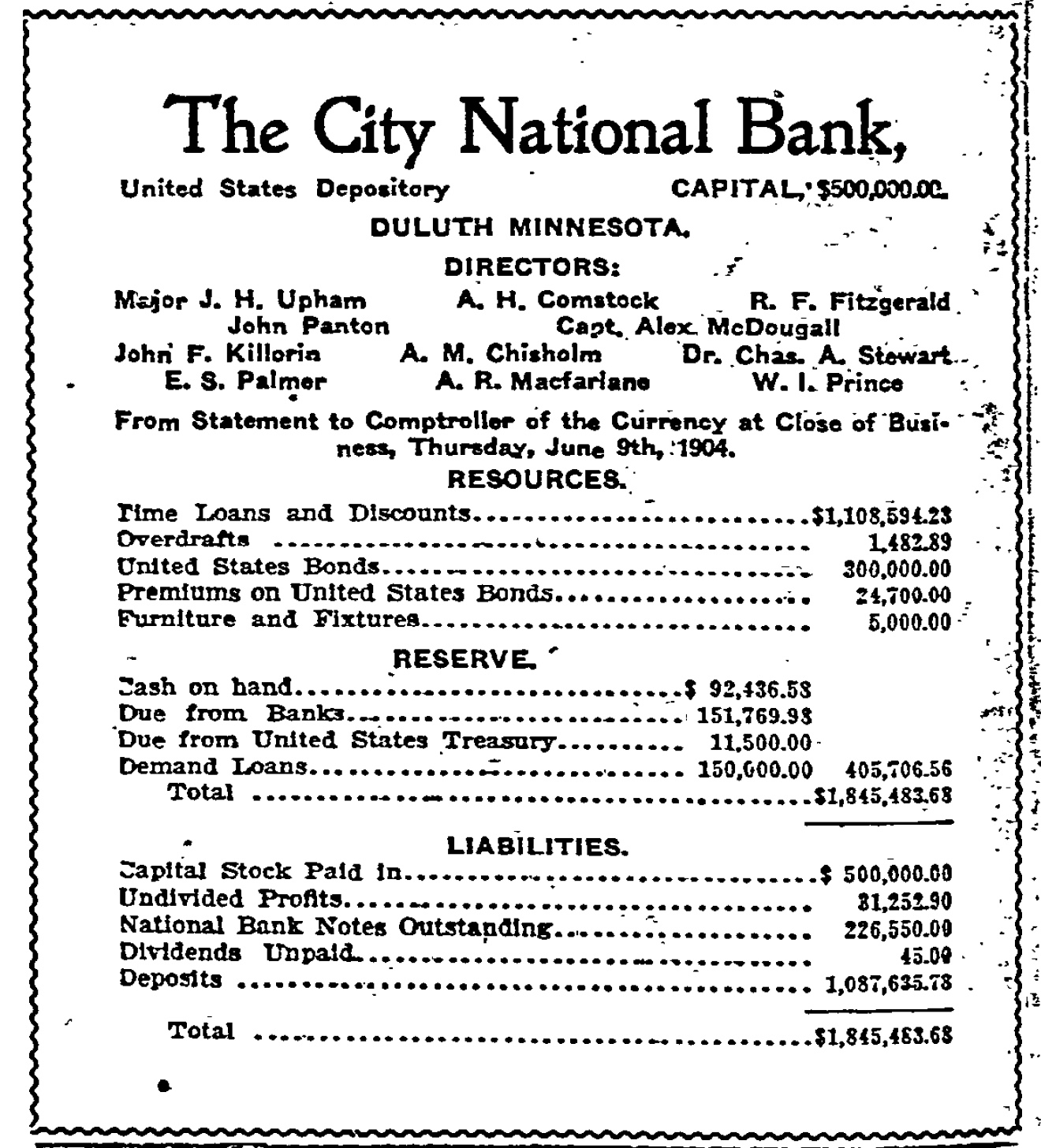
Today, my interest is to touch on McDougall’s position as a director on the City National Bank of Duluth in the early years of the 20th century. A “national bank” was one created by National Banking Act of 1863 to foster a system of national banks under the supervision of the Comptroller of the Currency. Unlike the 21st century, banks tended to be overwhelmingly state-chartered and local from the colonial era and throughout the 19th century. These “national banks” were intended to stabilize the money supply and to have a longer and more transparent financial life than their state contemporaries. This system would continue until the formation of the Federal Reserve System after the financial crisis of 1907 (also called the Panic of 1907) one of nearly a half a dozen since the end of the Civil War.
Though McDougall had only a limited role in the day-to-day operation of the City National Bank, it’s worth considering that with the higher reporting requirements and more prudent financial measures required, it was a position of some note. Within the hierarchy of local finance, such a position traded on McDougall’s good name, and he on theirs. It would pay dividends in the years to come.
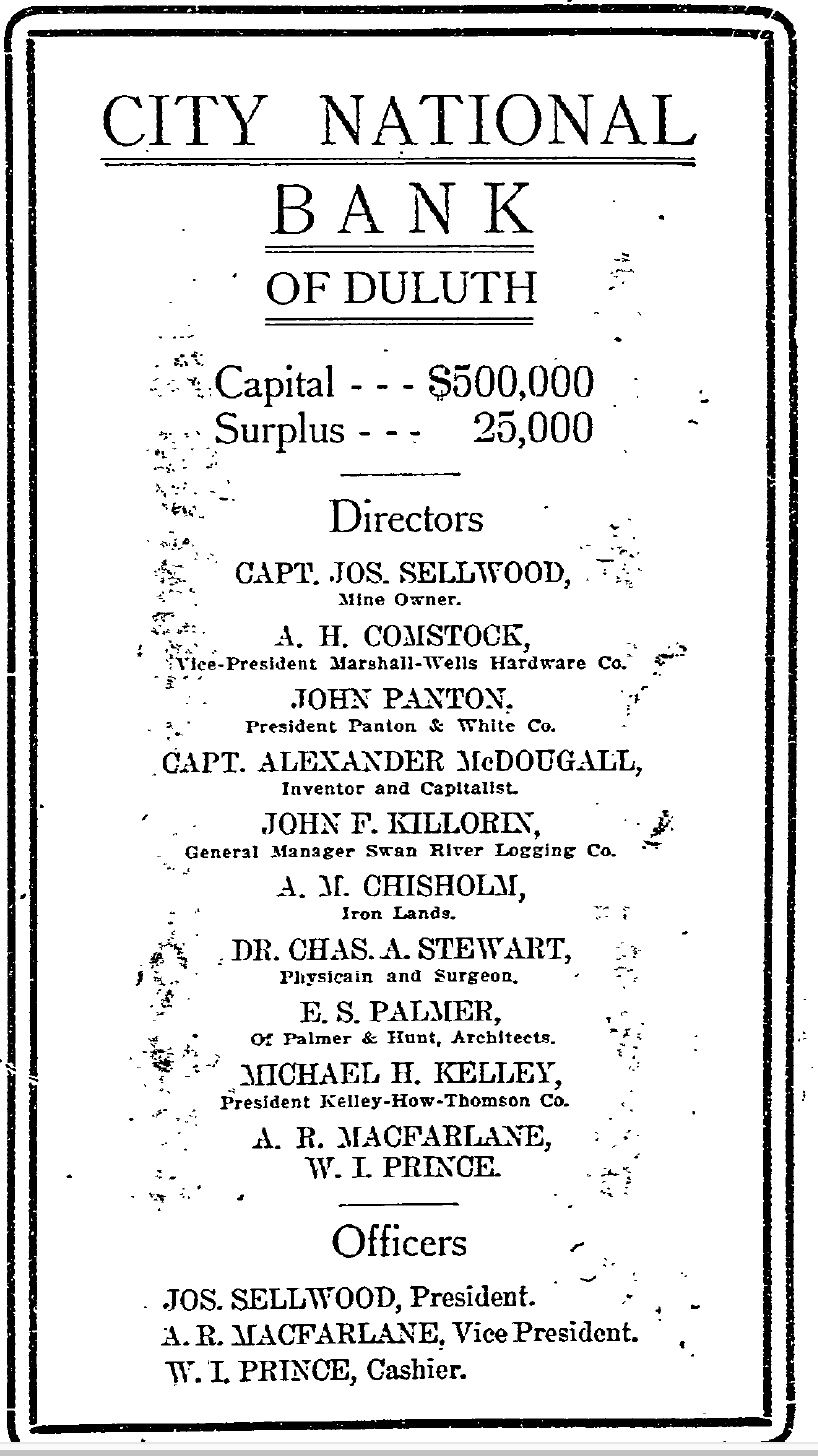
It’s also interesting to note in the image below, the people who served as directors with McDougall. His connection with Joseph Sellwood likely brought him into the position, and his description as “inventor and capitalist” also reflected his own sense of self. This unabashed identifier might seem a bit odd to our present-day ears, but there it is.
 McDougall's Whaleback